
Lake Forest CA – October 21, 2026 – PRESSADVANTAGE –
Fabricante Auto Body has published new consumer guidance explaining how collision repair can address components associated with Porsche performance and handling after an accident. The October publication focuses on vehicle geometry, suspension mounting areas, wheel alignment, body construction, wheels and tires, and the role of Porsche-specific repair information.
The new resource, “Porsche Collision Repair: Performance, Handling, and Vehicle Geometry,” adds a Porsche-focused topic to Fabricante Auto Body’s existing collision repair information. It was developed to help vehicle owners understand why collision repair may involve more than restoring a damaged bumper, fender, quarter panel, door, or other visible exterior component. Pasted markdown
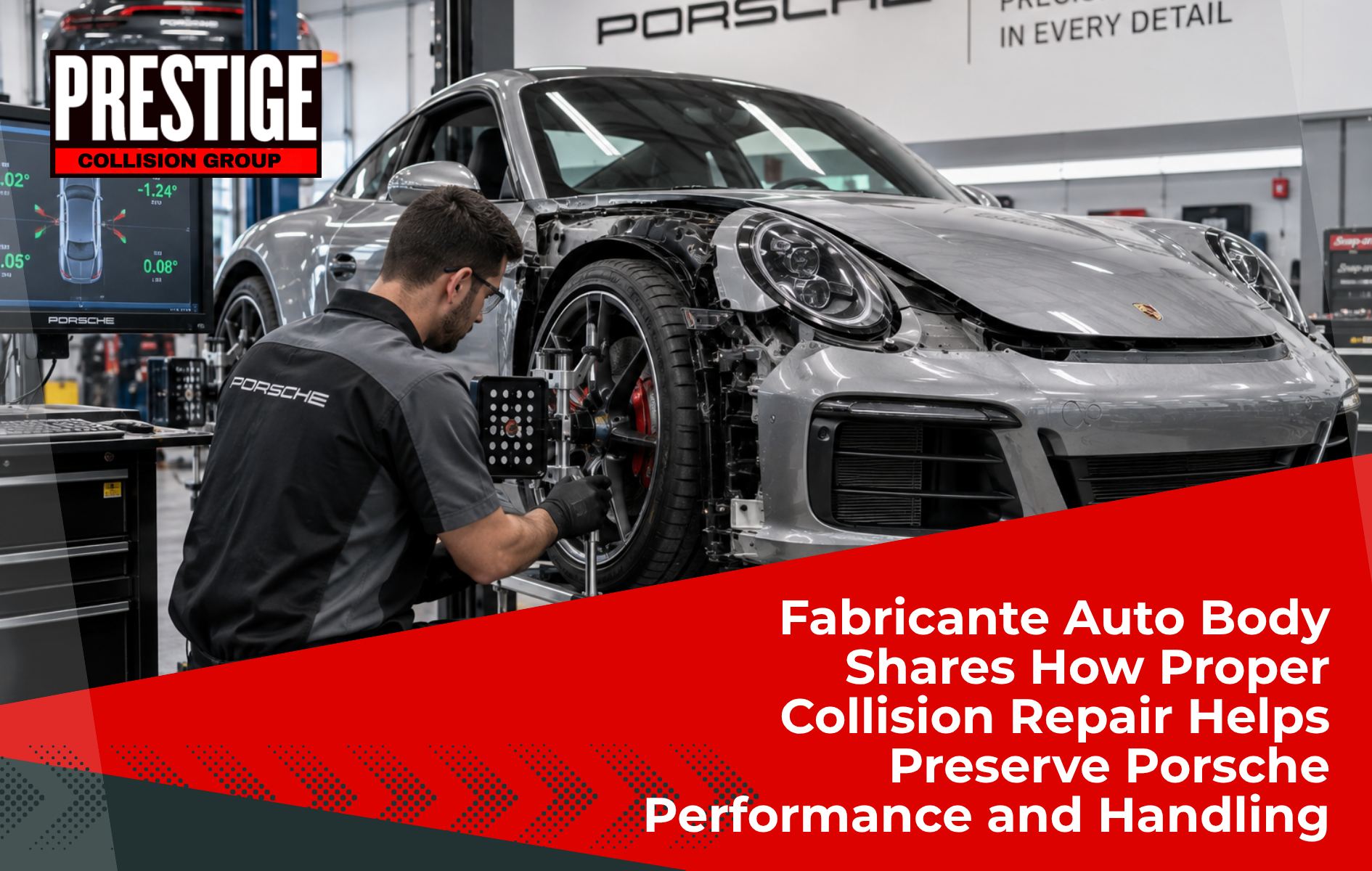
The guidance addresses a specific consumer information gap: the difference between repairing visible body damage and evaluating components that can influence wheel position, chassis geometry, suspension operation, or the relationship among adjoining parts.
A collision does not automatically mean a Porsche has sustained suspension or handling-related damage. Instead, the impact location, direction of force, physical findings, and applicable vehicle information help determine which areas are relevant to the repair.
Wheel-area impacts provide one example. Contact with another vehicle, curb, or roadside object can involve the wheel and nearby body components. Depending on the documented collision, technicians may evaluate the wheel, tire, suspension-related components, steering-related areas, mounting locations, and surrounding body components. The objective is to identify actual conditions rather than assume that direct wheel contact automatically results in suspension or structural damage. Pasted markdown
Vehicle geometry is another focus of the publication.
Suspension and steering components operate in relation to mounting locations within the vehicle. When a collision affects a component or the body area supporting it, restoring the exterior panel alone may not provide all of the information needed to evaluate the affected area.
Measurements can supplement physical inspection when they are appropriate to the collision and applicable repair procedure. They can provide information about component positioning and allow comparison with relevant specifications.
The guidance also distinguishes physical repairs from wheel alignment.
Alignment measurements provide information about wheel positioning and related geometry, but an alignment adjustment is not the same as repairing a damaged suspension component, steering component, mounting location, or adjoining body area.
If one of those components has been physically affected, the underlying condition may need to be addressed before final alignment procedures are completed. This distinction helps explain why collision repair documentation can contain separate operations for component repair and wheel alignment. Pasted markdown
Porsche-specific vehicle construction provides another reason the repair process can differ among damaged components.
Modern vehicle bodies can incorporate steel, aluminum, adhesives, mechanical fasteners, and other joining methods. The construction of the affected area can influence repairability and the procedures used during the repair.
Operations involving straightening, heat, welding, bonding, sectioning, or component replacement can have limitations or requirements associated with the particular part being repaired.
For that reason, the October guidance identifies manufacturer repair information as an important reference when determining the procedures applicable to a particular Porsche. Fabricante Auto Body provides additional context about manufacturer-specific collision repair through its OEM certification information. Pasted markdown
The publication also explains why the location of an impact can provide more useful repair information than simply categorizing an accident as a front, side, or rear collision.
A front impact may visibly involve the bumper, hood, fenders, or lamps. A side collision may affect a wheel opening, rocker, door, or quarter panel. A rear collision creates a different relationship among the bumper, rear body components, rear floor, wheels, and nearby mechanical areas.
These examples do not establish that performance or handling has been affected. Instead, the collision location helps identify which components should be considered during repair planning. Pasted markdown
Wheels and tires can provide additional information when they have been involved in an impact.
Visible wheel damage, tire conditions, or evidence of direct contact can help identify nearby components that may warrant evaluation. These observations are considered together with the other physical findings rather than being used alone to determine the repair scope.
The resource makes a similar distinction for suspension-related conditions. Changes in wheel position or alignment measurements can have different causes after a collision. Identifying the physical condition of the relevant components and mounting areas helps separate an adjustment from a repair. Pasted markdown
Component positioning during body repair is also addressed.
Repaired or replacement exterior panels must relate correctly to adjoining components, openings, and mounting locations. Test fitting and positioning can therefore be part of restoring the relationships within the affected body area before later repair stages are completed.
Electronic technology introduces another layer on appropriately equipped Porsche vehicles.
Depending on the model and installed equipment, electronic control modules can communicate with steering, braking, suspension-related technology, and driver-assistance systems. Diagnostic scanning can provide electronic information that complements the physical inspection when these systems are relevant to the collision.
The publication notes that diagnostic information should be considered in context. A stored diagnostic trouble code does not independently establish that a particular component was damaged in the accident.
Advanced Driver Assistance Systems, or ADAS, can also involve cameras, radar units, sensors, and associated equipment positioned near bumpers, windshields, mirrors, and other exterior components.
When collision damage or repair operations involve applicable equipment or mounting relationships, Porsche-specific repair information can identify diagnostic, initialization, calibration, or verification procedures associated with the work.
These electronic procedures serve different purposes from wheel alignment and physical body repair. Pasted markdown
The distinction is useful for consumers reviewing a modern collision repair estimate.
Body repair, measurement, alignment, diagnostic scanning, and calibration are separate operations addressing different aspects of the vehicle. Their appearance on an estimate depends on the documented damage and applicable repair procedures rather than on a standard list applied to every Porsche after an accident.
Post-repair verification can similarly vary according to what was repaired.
A collision involving only an exterior component can have different requirements from one involving direct wheel contact, a suspension component, a mounting area, or multiple affected systems. When applicable, measurements, alignment operations, diagnostics, calibration, or other verification procedures can follow the necessary physical repairs. Pasted markdown
The October publication organizes these considerations into a simpler four-part framework for Porsche owners: identify the collision location and direction, document the components and mounting areas involved, determine the Porsche-specific procedures applicable to those components, and complete relevant measurement, alignment, diagnostic, calibration, or verification operations after the necessary physical repairs.
This framework is intended to explain why restoring exterior appearance and evaluating performance-related components are separate considerations. It does not suggest that every collision requires structural work, suspension repair, alignment, or electronic procedures.
The actual repair scope depends on the conditions documented on the individual vehicle and the procedures applicable to those components.
Fabricante Auto Body’s Lake Forest location information provides details about the facility associated with the October publication. The Porsche-focused guidance adds a specific performance-and-handling topic to the company’s broader consumer collision repair information. Pasted markdown
Fabricante Auto Body provides collision and auto body repair services at 26341 Dimension Dr, Lake Forest, CA 92630, United States. The October consumer guidance gives Porsche owners a more concise reference for understanding how body repair, vehicle geometry, wheel alignment, suspension-related components, and electronic procedures can relate to one another when those areas are involved in a collision.
###
For more information about Fabricante Auto Body, contact the company here:
Fabricante Auto Body
Darrell Gates
949 859 8639
darrell@prestigecollisiongroup.com
26341 Dimension Drive, Lake Forest CA, 92630


