
Ardmore, PA – October 02, 2026 – PRESSADVANTAGE –
Evolve Collision Centers has published a September consumer guide explaining the role of post-repair vehicle inspections following collision repair. The new resource outlines how completed repair operations can be reviewed through component fit and installation, exterior finish, vehicle-system considerations, and verification procedures applicable to the individual vehicle.
The September publication focuses on a stage of collision repair that occurs after the primary body and refinishing work has been completed. Its purpose is to help vehicle owners understand that the completion of physical repairs does not necessarily represent the final step in the overall repair process.
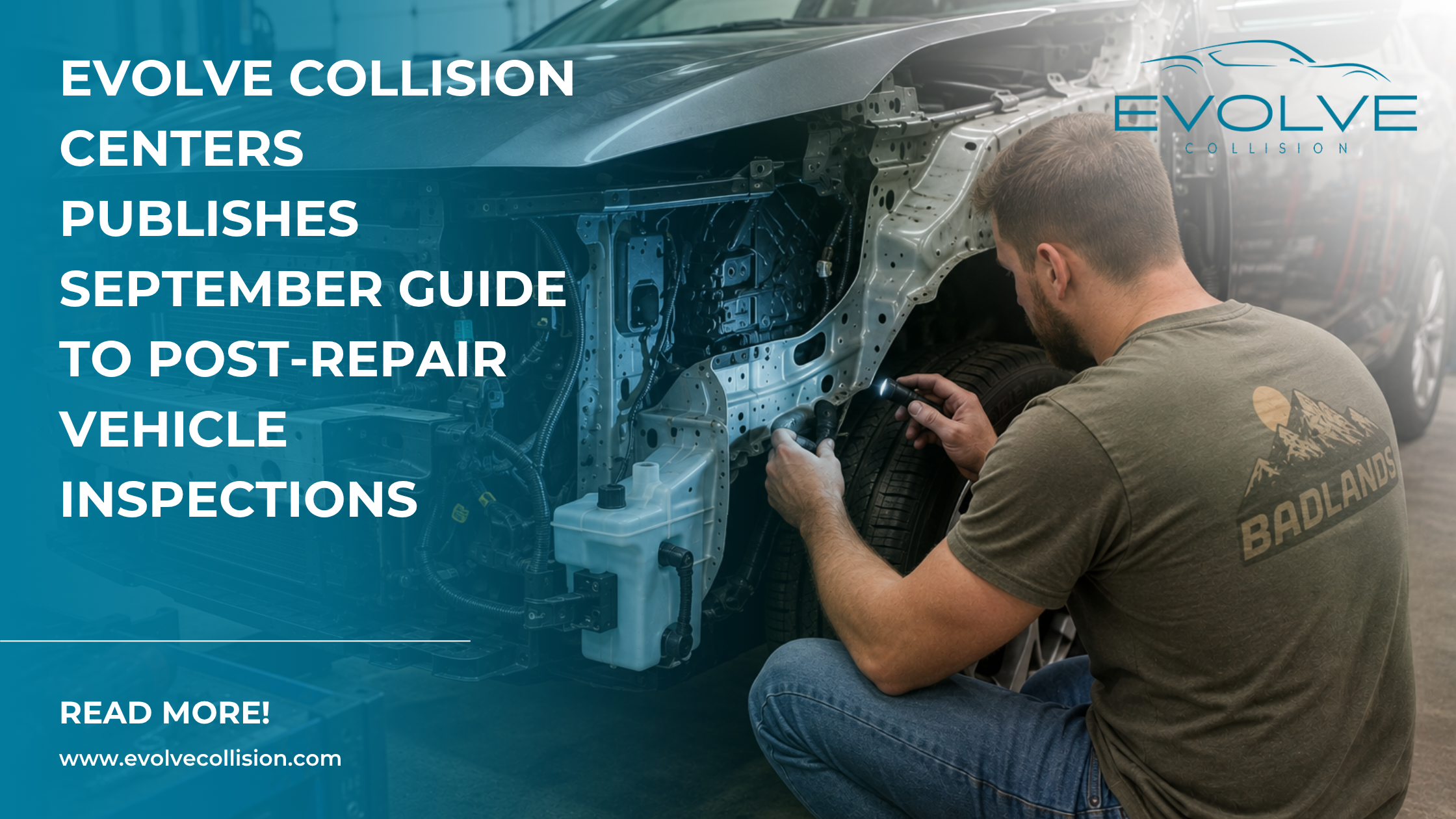
Post-repair inspection can involve reviewing work performed against the documented repair plan and applicable vehicle-specific information. The exact procedures vary according to the vehicle, collision damage, components involved, and repairs completed.
Evolve Collision Centers’ guide separates the subject into four areas: physical repair review, exterior fit and finish, vehicle technology and applicable procedures, and final documentation.
The first area is reviewing repaired and replaced components.
Collision repairs can involve components ranging from bumper covers, fenders, doors, hoods, and quarter panels to lamps, glass, trim, brackets, and other parts. Depending on the repair, some components may have been repaired while others were removed, replaced, or reinstalled.
A post-repair review can consider whether applicable components have been installed and whether the operations identified in the repair plan have been completed.
Component fit can also provide information relevant to the review. Doors, hoods, liftgates, lamps, bumper covers, trim, and other exterior components have relationships with surrounding panels and attachment locations. The considerations relevant to each component depend on the work performed and the construction of the vehicle.
The September guide does not present one universal inspection checklist for every collision repair. A vehicle receiving bumper repair, for example, can involve different completion procedures from a vehicle receiving door replacement, structural work, glass replacement, or repairs affecting electronic systems.
Additional information about Evolve Collision Centers’ repair process is available through its collision repair resource.
The second area covered by the September guide is exterior fit and finish.
Collision repair can involve restoring damaged painted surfaces or refinishing repaired and replacement components. When refinishing is part of the documented repair, the completed finish can be reviewed as part of the post-repair process.
Depending on the repair, this can include consideration of the repaired surface, surrounding finish, panel appearance, and areas affected by the refinishing operation.
The guide explains that appearance is an important part of collision repair, but it is not the only consideration during a post-repair inspection. Some repair operations involve components, attachment methods, corrosion-protection procedures, or electronic systems that are not readily visible when viewing the completed vehicle from the outside.
This distinction gives consumers context for why a vehicle can undergo additional review even after the repaired exterior appears complete.
The third area addressed in the publication is vehicle technology and applicable post-repair procedures.
Modern vehicles can incorporate cameras, radar units, parking sensors, electronic control systems, and other technology in or near areas commonly involved in collision repairs. Bumpers, windshields, mirrors, lamps, and surrounding components can contain or interact with advanced driver-assistance equipment.
Depending on the vehicle and work performed, manufacturer information may specify diagnostic scanning, calibration, system checks, or other procedures associated with particular repair operations.
The presence of ADAS equipment does not mean that every collision repair requires calibration or the same post-repair procedures. Applicable requirements depend on the individual vehicle, installed systems, components affected, operations performed, and relevant manufacturer information.
Evolve Collision Centers provides additional information about these procedures through its scanning and calibration resource.
The September guide also distinguishes scanning from calibration.
Diagnostic scanning can provide information from vehicle electronic systems and may be used when applicable to the vehicle and repair. Calibration is a separate procedure associated with particular cameras, radar units, sensors, or related systems when vehicle-specific requirements call for it.
Neither procedure is presented as a universal requirement following every accident. Instead, Evolve Collision Centers’ consumer guidance emphasizes reviewing applicable information for the specific vehicle and operations performed.
This vehicle-specific approach is also relevant because modern vehicles differ significantly in their construction.
Different models can incorporate high-strength steels, aluminum, plastics, composites, adhesives, electronic equipment, and other materials or technologies. Manufacturer procedures can address how particular components are repaired, replaced, installed, or verified.
As a result, post-repair inspection is connected to the repair plan that preceded it. The operations performed during the repair help determine which completion procedures are relevant.
The fourth area of the September publication focuses on documentation and final review.
Repair documentation can develop throughout the collision repair process. Initial information records observable damage, repair planning identifies applicable operations, and additional findings can be incorporated when they are documented during the repair.
At the completion stage, the repair information provides context for reviewing what was performed.
Depending on the individual repair, this can involve confirming component installation, reviewing completed refinishing operations, considering applicable scanning or calibration procedures, and verifying other operations identified in the repair plan.
The guide explains that this process should not be interpreted as a guarantee that every repair will involve each of these steps. A relatively limited body repair and a more extensive collision repair can have different documentation and verification requirements.
For consumers, understanding this relationship can make the final stages of collision repair easier to follow.
A post-repair inspection is not simply a second damage estimate. The initial evaluation focuses on documenting collision-related conditions and developing the repair plan, while the post-repair review concerns the work performed and the procedures applicable to completing that plan.
The September publication also gives vehicle owners context for questions they can ask when a repaired vehicle is ready for delivery. Consumers may want to understand which components were repaired or replaced, whether additional conditions were identified after the initial estimate, which vehicle-specific procedures applied, and whether scanning or calibration was required for the work performed.
The answers will vary according to the individual vehicle and repair, which is why Evolve Collision Centers’ guide avoids presenting a single checklist as appropriate for every situation.
Post-repair review can also extend to components that were removed and reinstalled during the repair. Exterior trim, lamps, bumper components, glass-related parts, and other equipment can be involved even when those components were not themselves the primary area of visible collision damage.
When glass work forms part of the repair, vehicle-specific considerations can also apply to components or technology associated with the affected glass. The procedures relevant to those systems depend on the vehicle and repair operation.
The guide further explains that the final appearance of a repaired vehicle and completion of technical procedures represent related but distinct aspects of collision repair. Refinishing can address the visible surface, while other repair and verification procedures can relate to components or systems that are less apparent to the vehicle owner.
This distinction is one of the central points of Evolve Collision Centers’ September publication.
Rather than defining a completed repair solely by exterior appearance, the guide explains how final review can correspond to the documented work performed on the individual vehicle.
The resource is intended as consumer education rather than an independent post-repair inspection standard. Specific inspection, scanning, calibration, and verification procedures remain dependent on the vehicle, documented repair operations, and applicable manufacturer information.
Additional information about body repair procedures is available through Evolve Collision Centers’ auto body repair resource.
The September guide expands Evolve Collision Centers’ consumer information by focusing specifically on the completion stage of collision repair, providing vehicle owners with a clearer understanding of what can occur between completion of the primary repair operations and delivery of the vehicle.
For drivers in Ardmore and surrounding Main Line communities, Evolve Collision Centers provides collision and auto body repair services from its facility at 2560 Haverford Rd, Ardmore, PA 19003.
About Evolve Collision Centers
Evolve Collision Centers provides collision and related automotive repair services, including auto body repair, paintless dent repair, refinishing, auto glass work, vehicle scanning and calibration, and OEM-certified repair capabilities. The company serves vehicle owners in Ardmore and surrounding Main Line communities.
###
For more information about Evolve Collision Centers, contact the company here:
Evolve Collision Centers
Butch Cantz
(267) 692-6699
bcantz@evolvecollision.com
2560 Haverford Rd, Ardmore, PA 19003


