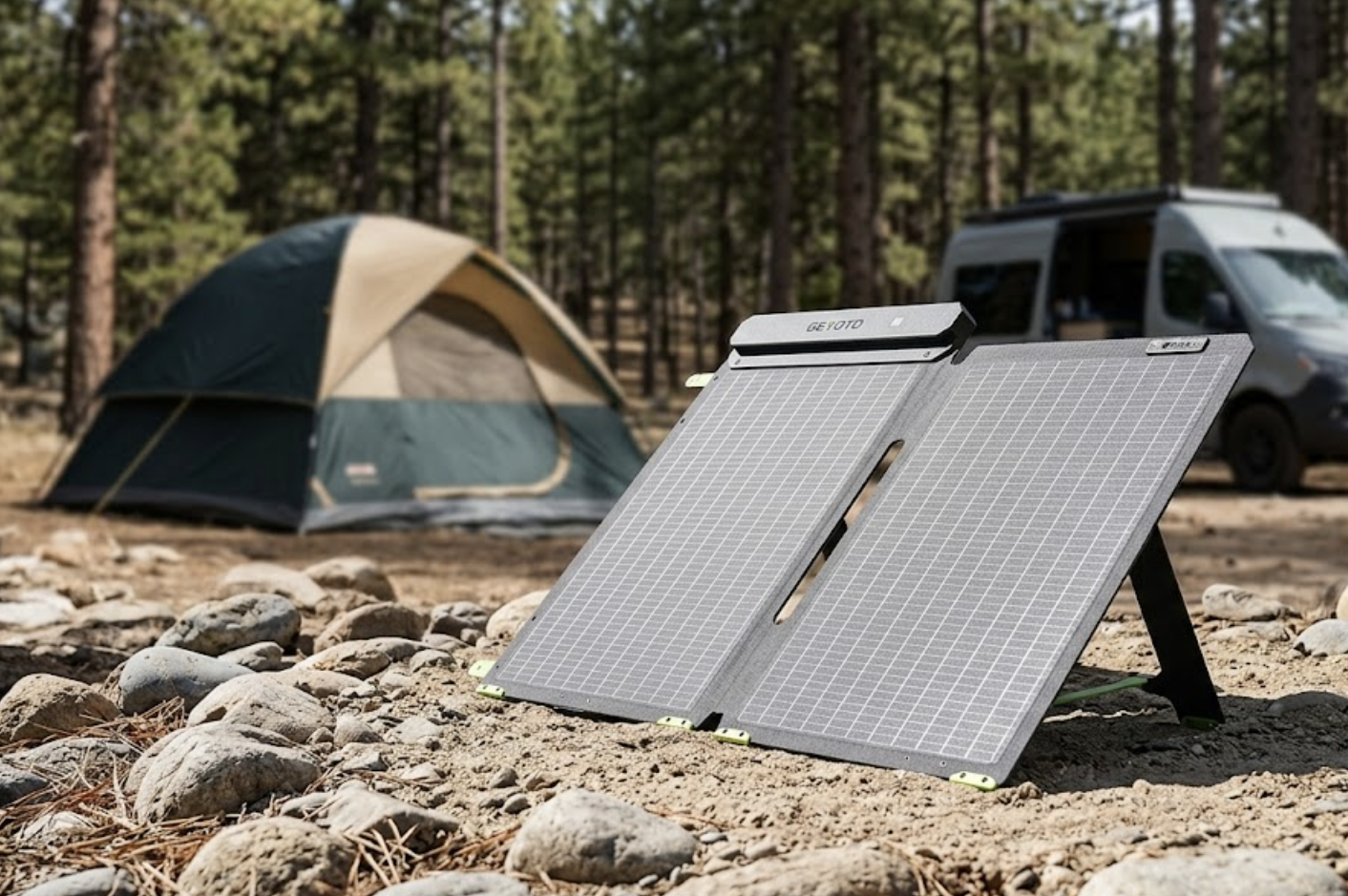
WILMINGTON, DE, UNITED STATES, August 9, 2026 /EINPresswire.com/ — Cross-country road trips demand exceptional preparation and reliable equipment to ensure absolute safety in remote areas. Vehicle-based travelers rely heavily on consistent power supplies to operate communication devices, navigation tools, and portable refrigeration units. However, the modern marketplace presents an overwhelming array of options that confuse consumers with conflicting performance claims. Many outdoor enthusiasts quickly discover that typical commercial descriptions fail to reflect true roadside functionality. Navigating this complex environment reveals that selecting a High Quality Portable Solar Panel 100W For Sale serves as the foundation for an independent mobile energy system. This precise power tier offers the perfect sweet spot for overlanders. Nevertheless, identifying authentic quality requires an understanding of technical variables rather than relying on promotional headlines.
This analytical procurement perspective directly reflects the foundational ethos of GEYOTO. A specialized team of artificial intelligence and energy engineers established the enterprise to bring scientific precision into the consumer power market. The engineering division deliberately redefines mobile power systems by focusing on structural integrity and predictable electrical yield. This focus ensures that the hardware consistently delivers power under real-world environmental stressors. The brand successfully bridges the gap between nominal power ratings and actual thermodynamic output for travelers across the country.
Decoding the Efficiency Gap: Laboratory Standard Test Conditions (STC) vs. Real-World Roadside Yield
Solar manufacturers utilize Standard Test Conditions to establish baseline power ratings inside factory settings. Additionally, the testing protocols mandate a fixed cell temperature of 77 degrees Fahrenheit (25 degrees Celsius). However, actual roadside environments automotive overlanders face rarely match these sterile laboratory baselines. When a vehicle parks under intense summer sunlight, dark silicon surfaces rapidly absorb thermal energy, raising internal temperatures far beyond the ideal 25-degree benchmark.
Consequently, high ambient heat triggers a physical phenomenon known as thermal degradation. As cell temperatures climb, the overall output voltage drops significantly, reducing total wattage. Inferior panels experience severe power drops, often losing up to thirty percent of their rated capacity during hot afternoons. Discerning campers prioritize advanced cell compositions that maintain high operational efficiency despite elevated thermal thresholds. GEYOTO Technology Limited uses premium monocrystalline wafers rated at up to 26% efficiency to help reduce (not eliminate) the output loss that comes with heat. This deliberate design ensures that the system maintains optimal electron flow during demanding cross-country journeys.
Demystifying Environmental Shielding: What IP68 Water Resistance Truly Means in Rugged Environments
Environmental durability remains a critical factor for any equipment exposed to unpredictable weather during outdoor adventures. Manufacturers frequently highlight IP68 ingress protection ratings to convince consumers of absolute product resilience. Nevertheless, this classification does not mean that a panel can withstand indefinite exposure to harsh elements. Roadside realities involve complex stressors like acidic rainfall, morning condensation, and abrasive salt air.
Moisture intrusion typically threatens weak interfaces such as junction boxes and perimeter seams. Lower-grade panels often feature standard nylon borders that naturally absorb moisture over time. This absorbed water eventually penetrates internal layers, causing corrosion and terminal short circuits. In contrast, high-quality manufacturing uses ETFE lamination to give the panel surface an IP68 rating — a strong barrier against dust and water, though the junction box and ports should still be kept dry. Furthermore, robust construction methods eliminate stitched fabric edges entirely, replacing them with thermo-sealed composite layers. This advanced sealing methodology ensures long-term operational survival across multiple travel seasons.
The Interoperability Matrix: Vetting Connector Standards and Universal Power Station Compatibility
Modern overlanding configurations depend on modular hardware that connects effortlessly across different brands and platforms. Unfortunately, some manufacturers intentionally build proprietary connection systems to restrict consumers to a single ecosystem. Industry experts consistently recommend choosing solar panels that feature universal MC4 connector formats. This standard interface provides highly secure, weatherproof connections that accommodate diverse hardware arrangements easily.
However, achieving true physical compatibility represents only the first step in building a safe system. Operators must also analyze the underlying electrical matrix to prevent catastrophic component failures. Campers must verify that the open-circuit voltage of the solar panel matches the input parameters of the receiver. Fortunately, GEYOTO (GEYOTO Technology Limited) engineers its product line to maintain universal electronic harmony. The panel uses standard MC4 connectors and works with GEYOTO’s own N300/N1000 stations out of the box; if pairing with a third-party power station, check its Voc/input current limits first to confirm compatibility. This flexible compatibility provides maximum adaptability for complex mobile setups.
Trunk Space Economics: Balancing Folded Form Factor, Gross Weight, and Mechanical Rigidity
Vehicle stowage space always represents a finite luxury during extended cross-country road trips. Packing efficiency requires a careful balance between dimensional footprints, gross weight, and structural rigidity. Some manufacturers attempt to maximize portability by stripping away crucial protective elements to reduce total thickness. This aggressive weight reduction often creates highly fragile panels that lack internal structural backing.
Fortunately, high-quality engineering solves this dilemma by utilizing advanced composite materials that preserve strength while minimizing bulk. For example, rigid Ethylene-Vinyl Acetate backings provide exceptional impact resistance without adding unnecessary weight to the vehicle payload. Ergonomic details also play a substantial role in daily roadside deployment. Additionally, reinforced structural grommets allow campers to secure the array against strong winds using basic tie-down straps. Integrated molded handles further streamline the physical setup process, enabling a single operator to position the equipment effortlessly.
Red Flag Auditing: Instant Signals of Substandard and Low-Quality Portable Solar Units
Spotting low-quality solar hardware requires a systematic inspection of specific visual and documentation markers. Buyers can identify substandard manufacturing processes before deploying the equipment in remote areas. For instance, noticeable color variations across the silicon surface indicate the use of low-grade wafers. Furthermore, the presence of tiny micro-bubbles beneath the outer laminate layer reveals poor thermal bonding during factory assembly.
Another critical red flag involves the deliberate omission of vital engineering data from the product label. Substandard brands often hide crucial parameters like the Short-Circuit Current or exact temperature coefficients. The absence of these verified metrics suggests a lack of rigorous quality control and independent certification. Reputable manufacturers always provide transparent, easily accessible datasheets containing verified performance curves.
Conclusion: Mitigating Investment Risk with Validated Mobile Power Infrastructure
Securing a reliable mobile energy supply requires a conscious shift from transactional buying to long-term infrastructure investment. Road trippers must prioritize verified technical execution to guarantee continuous safety and comfort off the grid. Selecting premium hardware effectively eliminates the anxiety of unexpected power failures during remote expeditions. GEYOTO actively supports this standard of reliability through a dedicated US warehouse and comprehensive customer service channels. The enterprise ships every order free of charge, ensuring rapid delivery timelines for customers across the United States.
Every unit ships with a standard 1-year warranty, extendable to 3 years for registered members. Ready to upgrade your road-trip power setup? Browse current 100W panel deals at https://www.geyoto.com/.
GEYOTO Technology Limited
GEYOTO Technology Limited
+ +1 213 292 9187
email us here
Visit us on social media:
Instagram
Facebook
YouTube
TikTok
Legal Disclaimer:
EIN Presswire provides this news content “as is” without warranty of any kind. We do not accept any responsibility or liability
for the accuracy, content, images, videos, licenses, completeness, legality, or reliability of the information contained in this
article. If you have any complaints or copyright issues related to this article, kindly contact the author above.

Media gallery