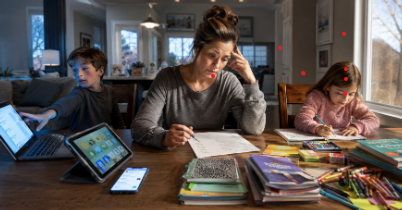
As classrooms cut back on screen time, parents face a new challenge: keeping their kids equipped with school supplies year-round
EL MONTE, CA, UNITED STATES, July 7, 2026 /EINPresswire.com/ — With major school districts like LAUSD imposing limits on screen use by children, new debates emerge on how parents can equip their homes with the right tools without adding store trips and burnout.
The traditional August back-to-school shopping rush is dead. In its place is an intensive, year-round logistical hurdle that researchers, child development experts, and sociologists are classifying as a primary driver of modern parental exhaustion.
This foundational domestic friction was deeply quantified in a landmark study published in the peer-reviewed Journal of Marriage and Family (Weeks & Ruppanner, 2024). The research mapped a distinct typology of household labor, isolating “Core Daily” tasks – the invisible, continuous mental work of tracking, scheduling, and predicting a child’s immediate needs – from intermittent chores. The data proved that parents, particularly mothers, overwhelmingly shoulder the burden of these non-negotiable, daily executive management tasks. This state of constant, “always-on” tracking was directly linked to chronic parental stress and emotional burnout long before recent classroom shifts.
Now, this existing fatigue is on the threshold of hitting a new high due to a major, current nationwide shift in public education. Following the historic, unanimous resolution by the Los Angeles Unified School District (LAUSD) – the nation’s second-largest school system – to aggressively restrict classroom tablets and laptops in favor of “paper and pen assignments,” schools have officially entered a massive de-digitization phase. While beneficial for reducing childhood screen addiction, this rapid pivot back to basics has stripped away the automatic convenience of digital portals. In turn, it is shifting the logistical burden of frequent shopping and stocking-up on tools of tactile learning and creative supplies straight back onto already overextended households.
The Midnight Mile: The Invisible Household Tax
For a decade, the corporate narrative surrounding school shopping assumed an annual cycle: families bought folders and pencils in August, and the chore was complete. However, modern, project-based classrooms demand dynamic physical materials that evolve by the week, frequently with little to no advance warning for families.
The true breakdown happens during “The Midnight Mile” – the acute anxiety that sets in at 8:00 PM on a Sunday night when a child realizes they need highly specific supplies, craft materials, or project binders for class the next morning. When classrooms phase out screens, parents are forced to become an on-demand supply chain. While data from the National Retail Federation indicates that baseline back-to-school costs have hit historic highs, lifestyle experts note that it is the unbudgeted, recurring micro-transactions – and the frantic, multi-store retail runs required to complete them, that drain parental time and energy throughout the calendar year.
The Emotional Metric of Preparedness
The modern big-box retail model has failed to adapt to changing household structures, continuing to package school and creative tools in broad, generic age brackets. What an early elementary student requires to foster fine motor skills and tactile confidence is structurally and developmentally distinct from the advanced project materials needed by a middle or high schooler.
Beyond time optimization, clinical child psychology consistently emphasizes that reliable access to physical creative tools directly correlates with a student’s confidence, focus, and social comfort inside the classroom. Conversely, walking into a classroom empty-handed introduces immediate, preventable performance anxiety. As American households increasingly turn to automated subscription models to offload routine cognitive friction – from nutrition to home utilities – the automation of physical educational materials represents the next major evolutionary shift in proactive parenting.
Sourcing a Structural Off loader
To resolve this systemic friction and fundamentally decouple educational preparedness from household stress, specialized services have emerged to automate the physical supply chain. Southern California-based BZBox.com has introduced a monthly subscription service that delivers educational and creative supplies directly to households. . The service offers grade-specific school kits, early learning materials, and activity bundles tailored to different childhood development stages.
The platform utilizes an online questionnaire to identify a household’s specific requirements, which are then used to curate the contents of each monthly delivery. Supply distributions are scheduled to align with standard academic calendars and seasonal classroom project timelines.
Balaji Ulli
BZBox
+1 626-672-0888
email us here
Visit us on social media:
Instagram
Facebook
YouTube
TikTok
School Supply runs just got a whole lot easier
Legal Disclaimer:
EIN Presswire provides this news content “as is” without warranty of any kind. We do not accept any responsibility or liability
for the accuracy, content, images, videos, licenses, completeness, legality, or reliability of the information contained in this
article. If you have any complaints or copyright issues related to this article, kindly contact the author above.

Media gallery